In the Kitchen
What wok hei actually means, and why you can taste it
18 June 2026 · 4 min read
There is a flavour you only get from a wok hot enough to frighten you. Here is what is happening in the pan.
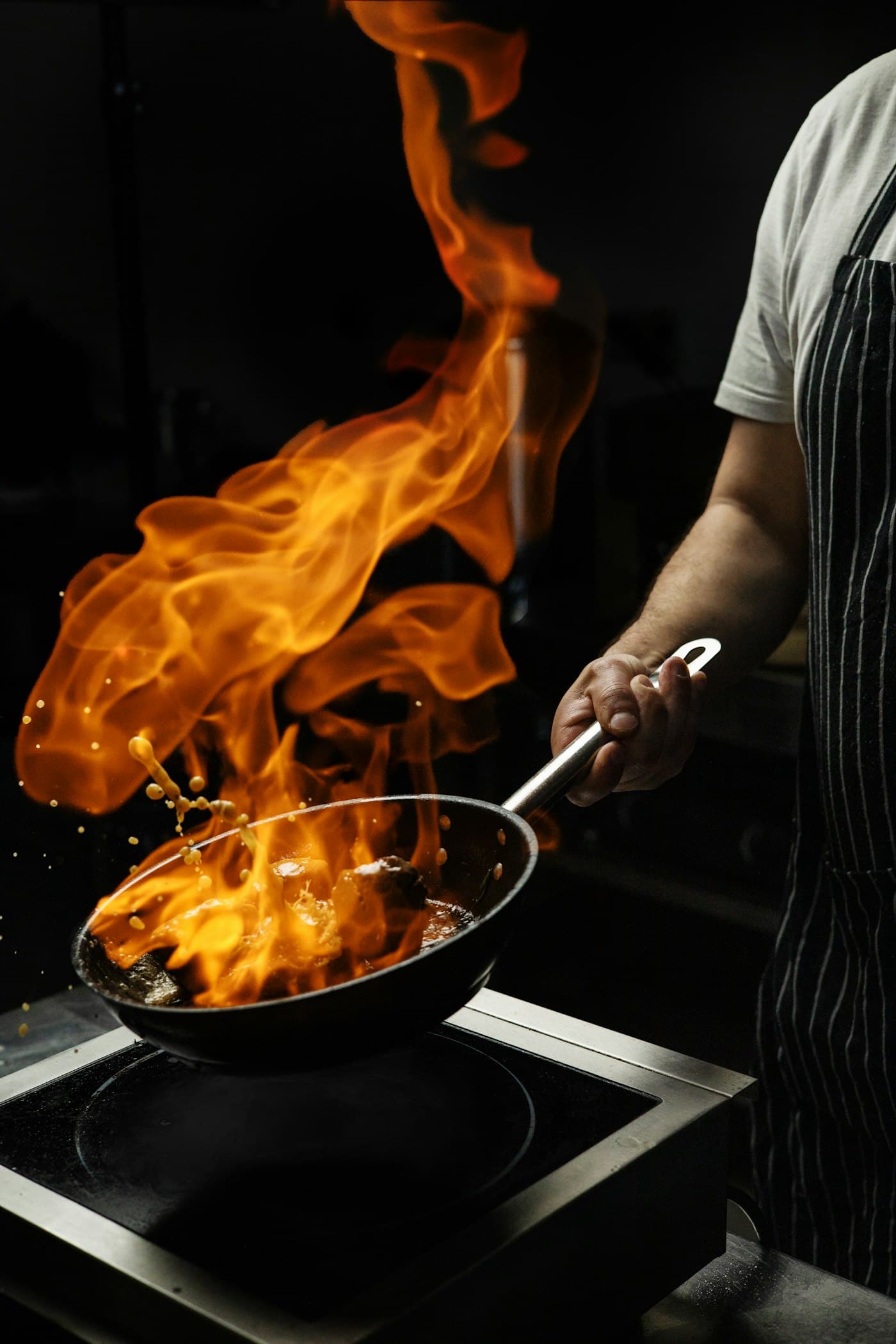
Ask a Cantonese chef what makes a plate of ho fun taste right and they will not talk about the sauce. They will say wok hei — literally the breath of the wok. It is the faintly smoky, almost metallic note that sits underneath a good stir fry, and it is the difference between a dish that tastes cooked and one that tastes alive.
Heat, and then more heat
A domestic hob runs at somewhere around three kilowatts. Our wok burners run at closer to twenty. That gap is the whole story. At that temperature the oil at the edge of the pan begins to smoke, the sugars in the sauce caramelise the instant they touch the steel, and the moisture coming off the vegetables flashes to steam before it has a chance to stew anything.
The cook is fighting the clock the entire time. A plate of beef ho fun is in and out of the wok in under ninety seconds. Any longer and the noodles break, the beef tightens and the smoke turns bitter rather than fragrant.
Why it cannot be rushed at the table
This is also why dishes leave our kitchen one at a time rather than all together. Each one occupies a burner on its own. We could hold them under a lamp until the whole order is ready, and the wok hei would be gone by the time it reached you. We would rather send the food out as it is finished and ask you to share as it lands.
It is how these dishes are eaten at home, and it is how they taste best. If your table would prefer everything at once, tell us when you order and we will hold it — but we will gently try to talk you out of it first.
Written by the kitchen at Han Chinese, 29 St Mary's Road, Market Harborough.